- Published
How to Start an Online Business From Home: 7 Steps

Most people who want to start an online business from home get stuck on the wrong question. They ask "what's the perfect product?" and spend months scrolling idea lists. The people who actually launch ask a smaller question: "what can I sell to 10 people by the end of the month?" This guide walks you through that path, step by step, with nothing but a phone, a kitchen table and a few thousand in savings.
Step 1. Pick a product you can explain in one sentence
Good first products for a home business share four traits:
- Small and light — cheap to store and ship (cosmetics, accessories, jewellery, phone cases, tea, stationery, kids' clothing).
- Margin of 2–3× over your cost, so delivery and returns don't eat the profit.
- Repeat purchase or gift potential — candles, skincare and coffee get rebought; jewellery gets gifted.
- Something you understand — you'll answer the same questions a hundred times; it helps if you actually care.
Avoid on day one: large furniture, fresh food with short shelf life, and anything that needs special licences or certification in your country.

Step 2. Test demand before you buy stock
Don't order 500 units. Order 10–20, or make five by hand. Then:
- Photograph them in daylight on a plain background.
- Post them to your own Instagram, Telegram and local chats with a price and "taking pre-orders".
- Count real messages that say "I'll take it" — not likes.
If 10 strangers are willing to pay, you have a business. If only your aunt is, change the product or the price and test again. This costs a week, not a fortune.
Step 3. Do the money maths on one order
Write it down for a single unit: cost price + packaging + delivery to you + your share of shipping + payment fees + a 5% buffer for returns and breakage. Subtract from the selling price. If what's left is less than about a third of the price, you'll be working for free once you add advertising.
Step 4. Sort out the legal basics
Rules differ between Russia, Kazakhstan, Belarus and other CIS countries, and they change, so check your local tax service or an accountant. In general:
- Most countries have a simple status for individuals selling on a small scale (self-employed or a sole proprietor on a simplified tax regime).
- Selling regularly without registering is risky once you accept card payments.
- Some categories (cosmetics, kids' goods, food) may need certificates or labelling.
Spend one evening on this before the first sale, not after the hundredth.
Step 5. Choose where you will sell
You can sell on large marketplaces, where traffic is built in but commissions and rules aren't yours, or sell yourself through social media and messengers, where you keep the margin and the customer. Many home businesses start with their own channels because the first 50 buyers come from people who already know them. We compare both routes in own channel vs marketplace.
Step 6. Set up a tiny home operation
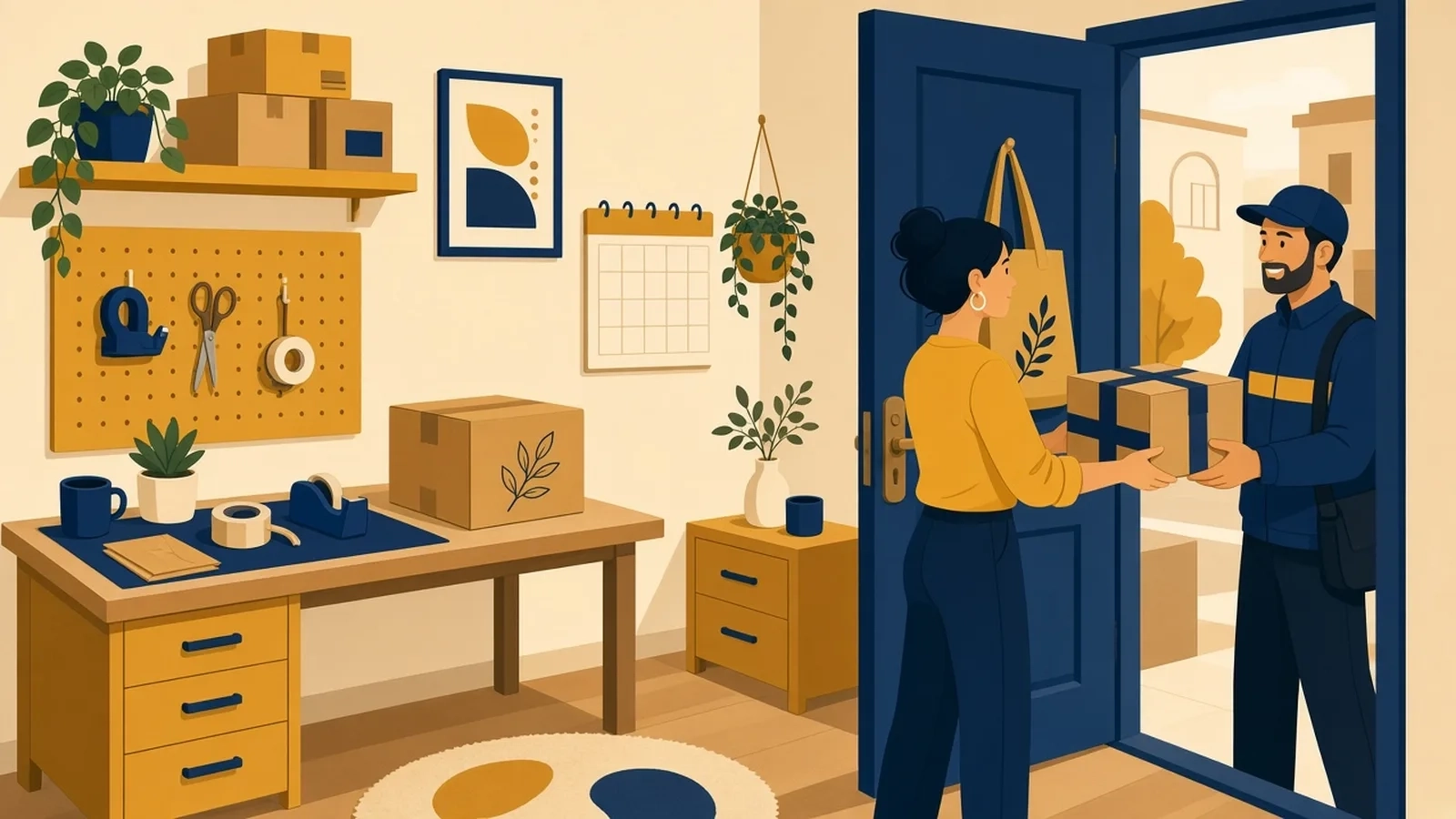
- One shelf or box for stock, labelled by product.
- A packing corner: boxes, tape, filler, thank-you cards.
- Two fixed shipping days a week, so you're not running to the post office daily.
- One place where every order is written down — even a notebook beats memory.
Step 7. Get your first 10 customers, then your next 100
The first 10 come from your network: friends, colleagues, local chats. Ask each one for a photo review. The next 100 come from content — showing the product in use, the making-of, and real reviews — plus small collaborations with local bloggers. Don't buy ads until you know your numbers from Step 3.
Once orders arrive faster than you can remember them, move them out of chats into a system. A free tool like datalizeCRM can hold your catalogue, orders and customers in one place, and its Basic plan is free forever.
FAQ
How much money do I need to start an online business from home?
For a small product test, the cost of 10–20 units plus packaging is often enough. Keep a reserve for a second batch.
What sells best from home?
Small, light products with a clear use and repeat or gift demand: cosmetics, accessories, home fragrance, kids' clothing, tea and coffee.
Do I need to register before my first sale?
Check your country's rules. In many CIS countries a simple self-employed or sole-proprietor status is quick to set up and protects you once sales become regular.